This morning, my friend Lara and I went bird watching with the good folks from the Travis County Audubon Society. The first bird we saw (um, make that heard) was a red-shouldered hawk, with its insistent, shrieking call.
This afternoon, I joined thousands of my friends up at the Texas State Capital. We carried signs and kicked up a fuss and made our presence known as best and beautifully as we could.
Haiku 5
April 5, 2025
Like red shouldered hawks
We cry out, sound the alarm
Claim territory
I love an indoor-outdoor kind of house. I love open windows, and sitting on the back deck to write. I love looking at the owl box from my living room, and bringing in stones and seed pods to set on the sills.
Sometimes someone takes it too far, like when a raccoon and two babies came in through the dog door or when rain swells the threshold or a bird builds a nest in my husband’s bike helmet. Or, today, the coriander-scented visitor creeping across our bedroom floor.
Haiku 4
April 4, 2025
A leaf? Bit of bark? Stink bug vibrates in reply He’ll show himself out
Gosh, y’all. There is so much going wrong in our world. It’s hard to stand. It’s hard to fathom. Sometimes, it’s almost hard to breathe.
Today, though, I lucked into a really good day. I spent it surrounded by librarians, and honestly, whose days don’t librarians make? They are miracle matchmakers. Heroic helpers. Great-hearted guides. (In case anyone is either drunk or confused, librarians are the good guys. I’m looking at you, Texas Leg.)
Anyway, thanks to the Texas Library Association for helping lift the cloud cover for just a bit. I plan to do what I can to carry little glimmers of light going forward.
(If you’re just hopping on, this is day 2/30 of my National Poetry Month celebration wherein I write a haiku each day… and invite you to join me in writing 1 or 5 or 30 of your own! More details in yesterday’s post…)
I drove from Austin to Dallas today, for the annual Texas Library Association conference. This entails braving I-35 for several hours, something only the brave or foolish would ever do, voluntarily at least. But the thing that makes this concrete chaos worth it (besides the approximately gazillion brilliant and committed librarians I’m going to get to say hi to and bow down to tomorrow) is what we know around these parts as Ladybird’s Legacy. You kind of have to see it to believe it, really.
Haiku 2
April 2, 2025
Riot of hatchlings
Spread wings, burst into song
Highway bluebonnets
Welcome to my 16th year of celebrating National Poetry Month by writing a haiku-a-day. (Maybe, for you, it’s just year one. Great! Welcome! Join me!)
What are the rules? Well, a haiku is a three-lined unrhymed Japanese poetic form. The westernized version counts syllables (5 syllables, 7 syllables, 5 syllables) and I tend to use that in my practice but it’s not mandatory. Traditionally, haiku feature the natural world, refer (overtly or obliquely) to a season, and make a turn in tone, theme, or perspective after the 2nd line. Sometimes I’m very attendant to these rules, sometimes I play fast and loose; you should do with them what you may.
I used to have an incredible haiku community on twitter, back before the takeover. Our poemy clan feels dispersed now, so I’ll just share all over the place (Substack, Instagram, Facebook, Blog, Bluesky) and see what hits. Feel free to share yours too, in response to my posts or at your own place, in your own way. If you use these tags, I’ll try to find and read them!
More discussion about this practice over the next few days but it’s nearly bedtime (I don’t have nearly the staying power of Cory Booker!) so without further ado…
Haiku 1
April 1, 2025
Inside a cabbage an etching of an old oak plants a seed in me
Years and years ago, I saw Lucille Clifton read her work in a little sunstruck chapel on a Sunday morning. I was in awe, and too shy to speak, when everyone rushed up afterwards. I wish I’d been brave enough to praise her in a thousand languages, but she’s gone now. So, what I can do — what we can do — is lift up her poetry (elegant, human, perfectly wry) forever.
This month, my poetry sisters and I used Clifton’s notes to clark kentas our inspiration. I used the prompt loosely, and rather than trying to actually imitate her voice or style (she’s inimitable, IMHO) I just took the form — the notes — which (bonus!) suit our overaching theme this year of being in conversation.
Mine are written to just a few of the many Elizabeths in the world, real or fictional. These aren’t notes of praise or anger so much as trying to know, to understand, to see what we share, if anything, beyond the nine letters of our name.
Notes to the Other Elizabeths
By Liz Garton Scanlon
Bennet
A name pressed plain with pride but easily shortened, brightened, made less conventional and more delightful
which suited you, Lizzy, taking turn after turn around the garden, more prickly poppy than hedgerow more opinion than obedience more desire than decorum
that ought be dismissed, with prejudice
Jennings Graham
A name so committed to justice that you tied your bonnet tightly, smoothed your skirts, settled a book on your lap
and you stayed seated, you resisted, asserted your right to ride
you saved a seat for Rosa you saved so many seats
Cady Stanton
A name with gravitas and authority, a syllabic structure not to be ignored
you used it as resolute ramrod and radical blast, determined to push things through and open things up, to secure podium and public square, to swap bible for ballot box to speak for women
but just for women just like you
Taylor
A name straight-spined and headstrong, centered on a saddle (or at least that’s how it started) then it was off to the races
your eyes, they said, your jewels they said, your beauty, your promise your great, great loves
everything they said becoming, like your name, inescapable
QEII
A name so regal you bore it heavy on your head your whole life long, it was with you always in your handbag in the pockets of your smart tweed coat trailing you like a low-to-the-ground rump-heavy dog
that’s the only part of any of it that made you laugh
QEII
They said you were second but really, there were so many others before and after you
***ALSO, HEY, would you like to write with us in April? It’s easy! We’re writing ekphrastic poems based on vintage photographs. Do with that what you may.***
When my nephew was small, he made a now-family-famous declaration: “no is a hurting word.”
I share this with you, first, as solid evidence that children are the purest of poets.
And second, to say, hello, guess what?
The Poetry Sisters are doing “______ is a word” poems this month!
This prompt finds its origins with the brilliant Nikki Grimes, and is explained and modeled beautifully here, by our own Laura Purdie Salas. Our twist upon it is that we all agreed to start with words relating to conversation, which is our overarching theme for the year.
Ironically (considering said theme) we weren’t able to get our zoom together this month so we all worked on our own and, in my case at least, in a bit of a hurry. As a result, these are still at the very drafty stage, but nonetheless… here goes:
Listen
By Liz Garton Scanlon
Listen is a word clapping (tongue to teeth) a teacher insisting upon your attention
then drawing in close, whispering
in confidence
this very human hum of nearly silent letters
this very human hum
gifted and received, unwrapped, understood
Gossip By Liz Garton Scanlon
Gossip is a mouthy word loose and gapey, spilling sticky secrets that are sipped straight up
As for next month, we’re writing poems inspired by Lucille Clifton’s notes to Clark Kent! Join us if you’d like! Until then, may poetry be both balm and ballast. xo
All is not well in the world, that much is clear. But connecting to and conversing with each other? It’s something. It’s something we can do.
This year, my long-time poetry sisters and I are going to work with an overarching theme of conversation — and in an appropriately meta twist, we’d love for you to join us. Our prompts will go out each month like a call. Our poems — yours and mine — will be the answer.
This first month, we’re writing tankus — a fusion form that starts with a tanka followed by a responsive haiku. (See? Conversation!) I was happy to try these — I love Japanese forms (and very short poems in general) — so I have several, all linked.
Like so many folks all over, those of us in Texas just navigated a surprising winter weather event. Fortunately, this time (unlike in 2021), we kept our power and water, and the disruption was brief. But if we’re all really honest, we should no longer be surprised by these events, not the storms or droughts or fires or deadly freezes. Climate change is here, denial be damned. (And we’ve just left the Paris Climate Agreement and put the kibosh on the Green New Deal. It just makes me weep.)
Anyway. That’s what I was thinking about as I wrote this week. Weather, and what we’re doing about it.
Ice Strikes: Three Winter Tankus
Liz Garton Scanlon
Lantana blackened,
blue flame agave slipping
out of its own skirts.
The bitter cold unravels
well-rooted optimism.
Ice cracks like a voice, an earthly adolescence just inscrutable
Pipes burst and schools close,
not some storied snow-day joy,
just things freezing up –
knees, brakes, Earth on her axis.
We are stuck with what we’ve got.
This glassy snow globe, victim to constant tumult There’s no settling
Red-shouldered hawk screams,
her tender prey burrowed down
in cold denial
while meteorologists
repeat: unprecedented
We were invited to make ourselves at home here What a mess we’ve made
As for next month, we’ll be writing ______ is a word poems (inspired by Nikki Grimes.) Have a look at this post Laura did for more ideas, and consider using a term related to conversation if you want to play along! We’ll be posting on February 28, and invite you to do the same!
Our beginning-of-the-year selves were wise, y’all. We knew we’d be tired and short on time and pulled in different directions. We knew we’d need something short. Something manageable.
So, we chose to write haibun — a hybrid prose-poetry form that allows for longer musings first, and then, a captured moment, a grace note, a haiku. The first thing that happened (we shouldn’t have been surprised but we were) was the realization that haibun weren’t necessarily or instantly manageable. Sorry.
But the second thing that happened was stunning and beautiful and heartening. A little context. As a group, my poetry sisters and I meet once a month on Zoom — the Sunday before the Friday we intend to post new poems. We chat about life and about our prompts, and then we turn our cameras off and write for awhile, and then we pop back on — usually much relieved to have at least started something, even if (as in the case of the haibun) it was trickier than we’d hoped or anticipated.
This time, it was just Tanita and me on Zoom (see above re. being short on time and pulled in different directions this time of year). We talked a little, generally, about possible topics and approaches for our poems, and then off we went to write.
Friends, when we came back together, we discovered we’d both written about the solstice, we’d both referenced the election (although Tanita had taken her reference out by then), and we’d both ended our poems with singing!!
Wha!?!?!? It is hard not to see this as a tiny but necessary miracle, the kind that can come from both poetry and being in communion with people you love and trust and get.
So, I post this gratefully and feeling slightly more buoyed and hopeful than I was earlier. Toward the light, my friends… toward the light.
Remembering Autumn on the Solstice
A haibun, by Liz Garton Scanlon
The leaves turn a deep, warm red, and the clocks fall back, and the tired, worried, bundled-up people rush past each other. They rush and complain and lash out and vote. They vote, and the days grow darker and ever darker. A chill slips down our boney spines and our hearts crack like stone. Is there anything alive out here? we wonder. Is there anything alive?
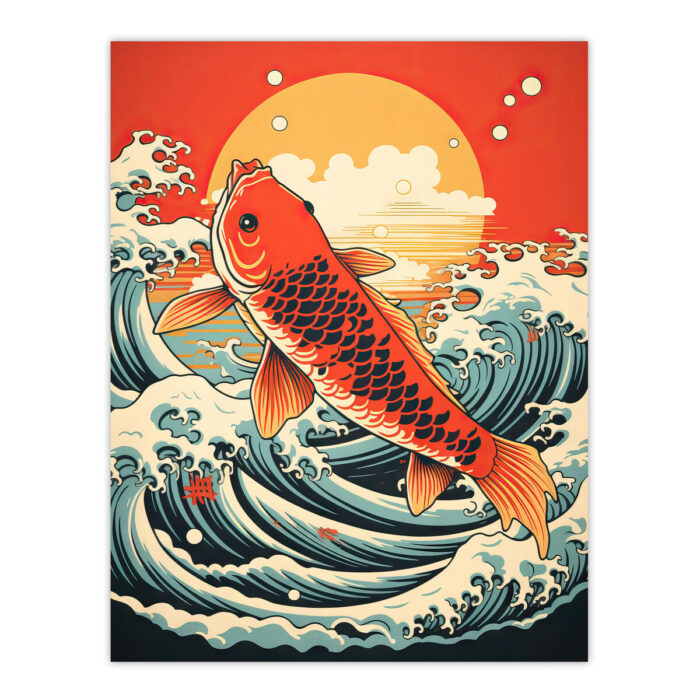
The sun rises up A fat orange fish splashing sky We chase it, singing
Our prompt this month was to use as our jumping off point a piece by Jane Hirshfield — Two Versions, published in her latest book, The Asking. It is a spare poem, 16 lines long and a lot of white space, briefly sketching out two takes on a dream of wildness and wild creatures and our place as observers or interferers. It is painful and mysterious and lovely, like so many of Hirshfield’s poems.
I took from it, loosely, the form (mine is longer but is narrative and use some single, questioning lines) and also the themes of duality and the dilemmas we face by being human in a wild world.
Half a Mind Liz Garton Scanlon Inspired by Jane Hirshfield’s Two Versions
Once, in my 20s, I rode shotgun in a car through a mountainous night and we collided with a deer.
I think it’s fair to say it that way.
It was an accident, but the deer died, and we could not bear our violence, the consequence of being human.
Years later, newly married, we mucked our way through an impossibly blurry season. Snails showed up everywhere
like some sort of patient plague…
so many that I couldn’t make my way into the house without crushing one. I tried. It was unavoidable.
And just last month, right there, a pile of debris on a windowsill. Carpenter ants, beginning the task of undoing everything in their way. Of undoing us.
I was of half a mind to let them be
to let them have the run of the place. It was the other half a mind I had to reckon with.
I still, always, have to reckon with.
You can read the others here… Tanita (who is also our Poetry Friday host!) Sara
Tricia Mary Lee Laura
Kelly
Next month, we wrap up the year by writing a haibun (prose + haiku) or a haiga (art + haiku) and sharing on the last Friday, December 27th. As always, we invite you to join us. Till then, friends, how grateful I am to be amongst big-hearted, open-minded, language-loving humans like you. xo Liz